Share

Related Links

Related Stories

  • Government behind on information security – Eleanor Laing
    As more and more fundamental tasks in society are carried out online, information security is becoming increasingly important, but the government is not moving fast enough, according to Conservatives MP Eleanor Laing.
  • Malaysia backs global cybersecurity group to share threat data
    Malaysia has set up the Global Cyber Security Alliance (GCSA) to encourage sharing of cyber threat information among nations.
  • Cashing in on Security Training
    At long last, a cybersecurity career field has emerged. The (ISC)² US Government Advisory Board Executive Writers Bureau examines where employment opportunities lie and how much you can expect to be paid in this very important sector
  • All Eyes on CSI: Cyberspace
    In an ever-changing world, the way crimes are committed, and subsequently investigated, must also change. Lauren Moraski takes us inside the world of modern-day cybercrime forensic investigation
  • Cybercrime Knows No Borders
    Prosecuting cybercrime is no easy task. Even with today’s forensic capabilities, legal inadequacies in various jurisdictions, not to mention uneven enforcement, make stemming the tide a rather daunting task. Lauren Moraski reports on the complications

Top 5 Stories

News

Gateshead College opens digital forensics lab

18 May 2009

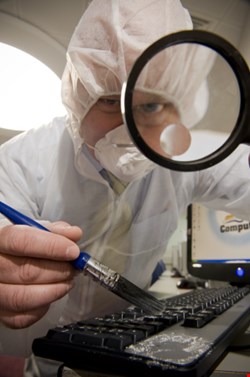
Gateshead College in the UK has opened a digital forensics lab for the training of information security staff to combat cybercrime such as digital fraud.

The £75 000 Gateshead College Digital Forensics Lab uses PC-based software to teach in-house information security staff the latest in high tech digital investigation to combat cybercrime such as financial fraud in the form of money laundering or false accounting, and unauthorised access to restricted websites or databases.

The digital forensics lab replicates an industry-standard fraud protection and law enforcement facility, and was designed with support and guidance from Northumbria Police and the North East Fraud Forum, which works to raise awareness of fraud-fighting techniques.

Detective sergeant Alan Batey, head of Northumbria Police’s computer crime unit, said: “We are seeing a year-on-year growth in the number of people using computers, the internet and mobile phones to co-ordinate and undertake criminal activities.

“The new Digital Forensics Lab will be a great resource to help companies uncover fraudulent activity, helping them to better protect their business, market share and ultimately profits.”

According to the Federation of Small Businesses (FSB), fraudulent internet transactions, phishing and security threats posed by viruses and hackers cost an average small business £800 a year, with some attacks causing losses of several thousands pounds.

This article is featured in:
IT Forensics


Comment on this article

You must be registered and logged in to leave a comment about this article.