
G7 nations have identified cyber threats as the most significant risk they face, for the second consecutive year.
As the Munich Security Conference (MSC) opened in Germany on February 13, the event’s partner consultancy, Kekst CNC, released the latest edition of its annual security risk report, the Munich Security Index (MSI) 2026.
The findings show that G7 countries (Canada, France, Germany, Italy, Japan, the UK and the US) ranked "cyber-attacks on their country" as their top concern in 2025, followed by "economic or financial crisis" and "disinformation campaigns from enemies."
This marked the second year in a row that cyber threats have held the top spot, rising sharply from fourth place in 2021 and seventh in 2022.
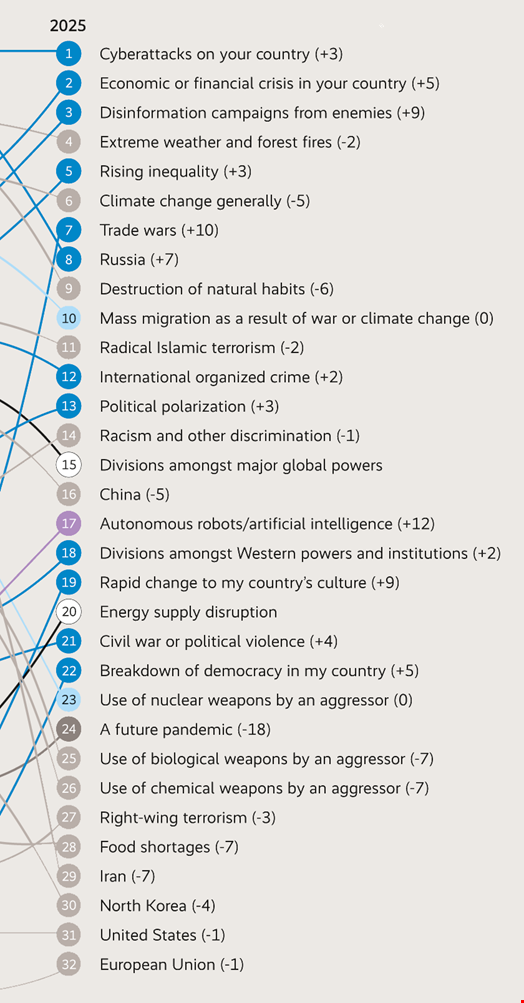
Cyber threats are detailed a top priority in Germany, the UK and Japan, where 75%, 74%, and 70% of respondents, respectively, identified cyber-attacks as one of their nation’s most serious risks.
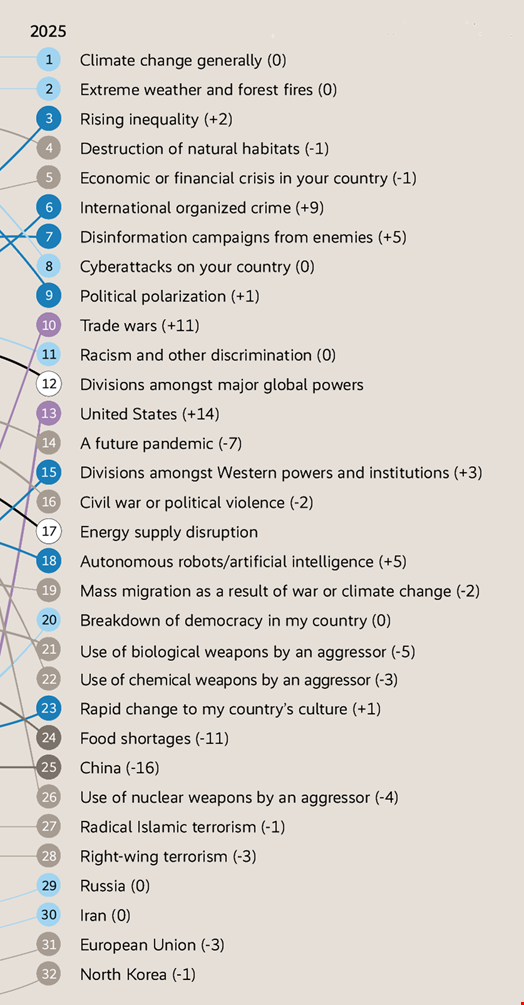
Meanwhile, in the Brazil, India, China, and South Africa (BICS) grouping, cyber-attacks have fallen to eighth place in 2025, down from fourth in 2024.
These nations now view "climate change" as their most urgent risk, followed by "extreme weather and forest fires" and "rising inequality." Disinformation ranks seventh on their list.
Rising Concerns in the UK, US and India
Across most countries, the majority of risks are now seen as less severe compared to last year. However, this trend reverses in the UK, the US, and India, where concerns over threats have grown.
The US, in particular, has seen a sharp rise in perceived risks tied to its economic and political landscape, including fears of food shortages, democratic instability, widening inequality, financial crises, civil unrest or political violence and escalating trade conflicts.
This year’s edition of the MSI was based on representative samples of around 1000 adults from each G7 and BICS nation, with 11,099 people surveyed in total. Polling was conducted by Kekst CNC and fieldwork partners between November 5 and 25, 2025, using industry-leading online panels.
The seriousness of each identified risk was measured based on five dimensions (severity, imminence, preparedness, trajectory and an overall criteria), each captured by a separate question. Respondents were selected according to stratified quotas for gender, age, residency, formal education and income to ensure representativeness. The final data was then weighted
to exactly match the quotas. The margin of error is 3.1 percent.
“Polling in autocracies is always challenging, as respondents may not feel that they can freely express their views. The results from China should therefore be interpreted with caution,” said the MSI authors.
Read now: Nation-State Hackers Embrace Gemini AI for Malicious Campaigns, Google Finds