Infosecurity News
WikiLeaks Publishes IP Chapter of Secret Trade Agreement
WikiLeaks published Wednesday the full draft text of the intellectual property rights chapter for the secretly negotiated Trans-Pacific Partnership (TPP). TPP is a trade agreement primarily involving Pacific Rim countries (although currently excluding Russia and China), and it accounts for around 40% of global GDP.
Irish Data Center Breach Hits 1.5 Million European Consumers
A breach of a data center in Ireland has compromised the information of 1.5 million people.
MacRumors Breached; 860k Passwords Potentially Compromised
MacRumors was targeted and hacked in a manner similar to the Ubuntu Forums hack in July, announced its founder and editor Tuesday. "It's best to assume that your MacRumors Forum username, email address and (hashed) password is now known," he warned.

How Snowden Breached the NSA from the Inside
There have been many suggestions on how Edward Snowden managed to steal so many top secret documents from the NSA; but the NSA has kept quiet. Now new research claims to know how it was done, and challenges the NSA to deny it.
Trustwave Acquires Application Security Inc
Trustwave, a Chicago-based firm with a wide range of security offerings and a particular specialism in data protection, has bought privately held New York-based Application Security Inc, a specialist in database security. The acquisition is complete, and terms have not been disclosed.

Waking Shark II – Stress Testing the City of London
Today is Waking Shark II day – the day the City of London's cyber resilience is tested in a day long exercise. Details are scarce (it wouldn't be a test if they were known) but the war game is expected to concentrate on the ability of banks to maintain operations in the face of a sustained cyber attack.

APTs and the Moriarty of Cybercrime
Researchers have analyzed 11 apparently distinct APT campaigns, and have come to the conclusion that they are not as distinct as previously thought – in short, there's a malware quartermaster, a Moriarty of cybercrime, serving multiple threat actors.
PCI DSS Version 3.0 Goes Beyond Compliance
The PCI Security Standards Council (PCI SSC) has published version 3.0 of the PCI Data Security Standard (PCI DSS) and Payment Application Data Security Standard (PA-DSS) for debit and credit card security, geared to move organizations from mere compliance to more comprehensive security approaches built on shared responsibility.
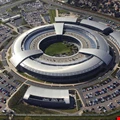
How GCHQ hacked Belgacom
In September Der Spiegel published details from Snowden leaks indicating that GCHQ had been behind the hacking of Belgian telcommunications company Belgacom, in an operation codenamed Op Socialist. On Friday it published further details indicating how the breach had been effected.

Stuxnet Also Infected Russian Nuclear Facility
Stuxnet is widely taken to be the harbinger of modern cyberwarfare. It was developed by the US and Israel to target the Iranian nuclear program – but now it appears that it also infected a Russian plant.

British Spy Agencies, Al Gore and Berners-Lee all Talking About Snowden
In an unprecedented move, the reclusive heads of Britain's MI5, MI6 and GCHQ spy agencies appear in public before a parliamentary committee, while Al Gore gives a speech in Montreal and Sir Tim Berners-Lee is interviewed by the Guardian – and all are talking about Snowden's revelations.
Adobe Breach is Far, Far Worse than Originally Thought
After Brian Krebs gave Adobe a strong hint that it had been breached, the company announced that just short of three million accounts may have been compromised. It later upped this to 38 million – but it now appears that the true figure is around 150 million.
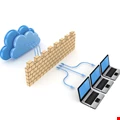
Lack of IT Automation Drives Frequent Firewall Outages
For UK and US businesses, increased complexity stemming from trends like cloud computing and virtualization is driving a need for more automation within the IT network; but reality is lagging the requirement.

Automatic IFS Encryption for IBM i with New Release from Linoma Software
Linoma Software’s Crypto Complete data encryption solution is breaking ground on IBM i by providing automatic encryption of files stored on the operating system’s integrated file system (IFS).
Computer Animation Snares 1000 Sex Predators
Terre des Hommes is a network of ten international organizations that work for the rights of children. TDH Netherlands, Monday, published a dossier on, and a call to action to stop, the web cam sexual exploitation of children.
CryptoLocker Most Current Prolific Malware
CryptoLocker is a new breed of ransomware that encrypts victims' data with public key encryption, and demands payment for the decryption key – the only way that infected victims can regain access to their data.

Privacy International Calls on OECD to Investigate Telecoms Relationships with GCHQ
Following its involvement in taking the UK to the European Court over GCHQ's mass surveillance program, Privacy International has now raised formal complaints with the OECD against the telecoms companies that have co-operated with GCHQ.

Snapchat the Bait; Adware the Delivery
Researchers have discovered a 'Snapchat' link that provides many things – mainly advertisement-serving adware – but the one thing it doesn't deliver is Snapchat itself.

US Government Agency Compromised by Social Engineering
Two researchers have demonstrated that lessons have not been learned from Robin Sage, a fictitious character created on social media in 2009, who went on to collect friends in the FBI and CIA and get job offers from Google and Lockheed Martin.

Amount of Mobile 'Madware' Spikes in Google Play
Mobile malware focused at Google’s Android operating system is proliferating at a prodigious rate. But increasingly, a particularly unsavory brand of malicious adware – dubbed “madware” – has been making significant inroads to Google Play. Volume-wise, it came to be present in 23% of apps in the first half of 2013.