
Ferrari is the most successful Formula 1 team of all time, with over 1100 race entries, 250 Grand Prix wins, 16 Constructor's Championships and 15 Driver’s Championships.
The prancing horse has been a fixture in Formula 1 since the first Grand Prix at Silverstone in 1950. Over 75 years on, the team continues to find success, as drivers Lewis Hamilton and Charles Leclerc have both reached the top step of the podium in iconic Ferrari red in the 2026 season.
A lot has changed in the decades since that 1950 inaugural Grand Prix and motorsport is no longer just about the drivers and the machinery around them. In the modern age, technology, data and analytics are core aspects of Formula 1 and it’s vital that information is protected from cyber threats.
The responsibility for ensuring Italy’s flagship Formula 1 team is prepared to defend against evolving cyber-attacks is Luca Pierro, Head of Enterprise Cybersecurity at Ferrari.
In this conversation, which took place at Ferrari’s Maranello headquarters, Pierro detailed to Infosecurity how the team implements a cybersecurity strategy that ensures staff are protected from cyber threats while also operating at speed. Pierro also shared how Ferrari reacts to evolving cyber threats and what the biggest issues he’s thinking about right now are.
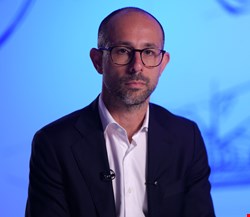
Infosecurity Magazine: You have a responsibility for managing cybersecurity across Ferrari. How do you go about meeting that challenge?
Luca Pierro: Myself and my team are working to protect our brand and identity. It is the biggest challenge we face every day.
We have different domains and different areas of expertise, every area of expertise has a different process. This is the real challenge because we act as one company, and we need to protect and cover all these domains while also working 24/7 to protect what we do on track.
IM: How do you implement your cybersecurity strategy with this challenge in mind?
LP: We have a large and complex environment and sometimes that is a problem because we have different needs for different technologies. Our partnership with Bitdefender helps, it’s fast and proactive, which provides good results and we have had good experience with the adaptive solution because it was easy to integrate in our environment
There is a lot of technology and different kinds of environments, so we try to focus our attention on what counts the most. Then we can consolidate the information, and we have a centralized picture of whatever is happening, making it faster to solve potential problems. It’s one of the key features we need when integrating technology into out stack, to make it easier to solve potential issues.
IM: How do you make sure that cybersecurity effectively scales when needed?
LP: The amount of data we possess is continuously growing, so it’s important to concentrate on the right parts of our systems that require focus. And that means having to manage the external facing areas of the network, because we receive tons of interactions from external systems, and we ingest a lot of data.
No matter how much data we ingest, we must be able to see where something might be going wrong and immediately figure out what is happening.
IM: How are cyber-attacks evolving and how does this change the way your team thinks about cybersecurity?
LP: We see how the attackers are now using legitimate tools, which is a shift. In the past, the attackers used specific malicious tools and then the protection solution would identify something negative or potentially negative and then raise an alert and block it for the team.
Now, it’s more difficult and more complex, plus there’s the inclusion of AI, with new capabilities and new attack techniques. That means for criminals who don’t currently have these skills, it has become very easy to make things with AI scripts and to try to exploit something. This capability is something that nobody had previously imagined.
That shift means we must be able identify suspicious movements or activities, but importantly, do it in advance, because it’s a matter of if, not when.
Of course, the main responsibility of myself and my team is to be ready to react in advance as much as we can. We need to be able to identify potential issues at every stage.
"We must be able identify suspicious movements or activities, but importantly, do it in advance, because it’s a matter of if, not when."
IM: What other cybersecurity issues are you thinking about right now?
LP: We are all human and we interact as humans. But that means attackers can test humans, now with the help of AI and large language models to convince their targets that they are talking with a real person. Attackers understand and know a lot of information about people and organizations and can use that to cause damage.
So, one of the things we are thinking about the most is AI.
Then there are the supply chains that are connected with us: but we can’t always protect things outside of our doors, at our suppliers. We share information [about cybersecurity threats] with them, but it’s a problem we are aware of.
IM: The Bitdefender logo is on the Ferrari cars. How does the relationship between Ferrari and Bitdefender fit in with the team’s wider cybersecurity strategy?
LP: Bitdefender provides us with a tool. But on top of this tool, Bitdefender offers us something more valuable: that’s the partnership and the people.
The tool was easy to install, and it offers a lot of functionalities. When we started, we got together and set out a step-by-step approach to review our services and how we could integrate them, so had the right levels of visibility and could also decide where to act and make changes.
There’s the partnership too. Since the beginning of our relationship, everything was natural, we were speaking the same language and shared the same concerns. But also, if we have suggestions or questions, we can have a quick call with them for their view.
What is the best thing is the way we cooperate. We can really rely on the team. From time to time, as a cybersecurity team, we face an issue because they sometimes happen. But we can have a discussion with the technical team and they come on board to help the situation.
Yes, it’s about technology, but it’s also about the people and that has helped this partnership has grown year on year.
Image credit: Jay Hirano / Shutterstock.com